
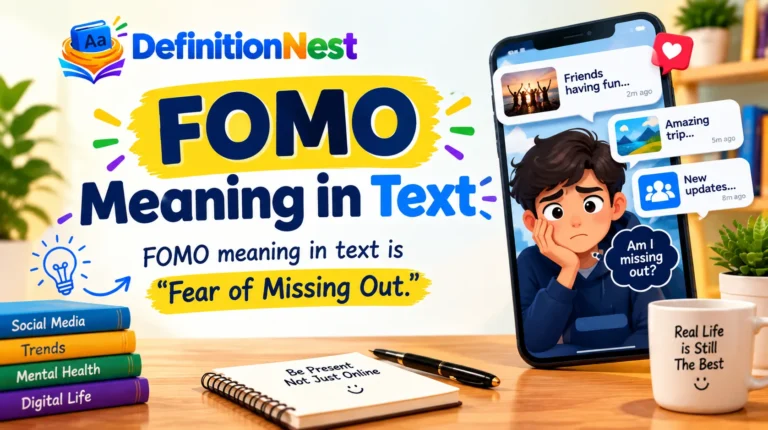
If you see “FOMO” in a text, comment, DM, or social media post, it usually means “Fear of Missing Out.”
People use FOMO when they feel worried that they are missing something fun, important, exciting, or popular.
It can happen when friends go somewhere without you, when you see people enjoying an event online, or when everyone seems to be talking about something you do not know about.
For example:
“Everyone is going to the concert. I have FOMO now.”
Here, the person means they are worried about missing the concert and wish they could be there.
FOMO is common in everyday texting and online chats. It is short, easy to type, and works well when people want to describe that feeling quickly.
What Does FOMO Mean in Text?
FOMO meaning in text is “Fear of Missing Out.”
It describes the feeling that you may be missing a good experience while other people are enjoying it.
Someone may text:
“I have serious FOMO.”
This could mean:
- They feel left out.
- They wish they were included.
- They think they are missing something fun.
- They are curious about what others are doing.
- They feel bad about staying home.
- They do not want to miss an important event.
The exact meaning depends on the conversation.
FOMO does not always mean that someone is truly upset. Sometimes people use it in a funny or casual way.
For example:
“You guys ordered pizza without me? FOMO!”
The person may simply be joking because they wanted pizza too.
What Does FOMO Stand For?
FOMO stands for Fear of Missing Out.
Each letter comes from a word:
- F = Fear
- O = Of
- M = Missing
- O = Out
The phrase is used when someone feels that other people are having an experience that they are not part of.
In texting, people normally write it as FOMO in capital letters, but lowercase fomo is also common.
Examples include:
- “I have FOMO.”
- “This gave me FOMO.”
- “I’m getting major FOMO.”
- “Don’t make me feel FOMO.”
- “I skipped the party and now I have FOMO.”
All of these point to the same basic idea.
How Is FOMO Used in Texting?
FOMO can be used in many types of messages.
1. When You Miss a Party
Imagine your friends go to a birthday party without you.
The next day, they send you pictures.
You might say:
“Wow, I have FOMO now.”
You mean you wish you had gone.
2. When Friends Make Plans Without You
Suppose your friends are planning a movie night.
You see their messages and say:
“Can I come? I’m getting FOMO.”
This means you do not want to miss the plan.
3. When You See Something Online
Social media can also create FOMO.
For example:
“Everyone is at the festival. The pictures are giving me FOMO.”
The person feels like they are missing out because they can see other people enjoying the event.
4. When You Are Unsure About Going Somewhere
Someone might text:
“I don’t really want to go, but I have FOMO.”
This means they may not want to attend, but they are worried they will regret staying home.
FOMO Meaning on Social Media
On social media, FOMO often describes the feeling people get when they see others doing exciting things.
You may see posts about:
- Trips
- Parties
- Concerts
- Sports events
- New trends
- Shopping
- Games
- School activities
- Friend groups
- Popular places
- Special events
A person may look at these posts and think, “I wish I was there.”
That feeling is often called FOMO.
For example:
“These vacation posts are giving me FOMO.”
This means the posts make the person wish they were also on vacation.
Social media can make FOMO feel stronger because people usually share highlights. You may see the best part of someone’s day without seeing the normal or boring parts.
FOMO Meaning in Snapchat
On Snapchat, FOMO has the same basic meaning: Fear of Missing Out.
Someone may use it when friends are hanging out, traveling, attending an event, or doing something fun.
For example:
“Why didn’t you tell me you guys were going out? FOMO.”
The person is saying that they feel left out or wish they had been invited.
Snapchat messages are often short, so FOMO is useful because it expresses a full idea in only four letters.
FOMO Meaning on Instagram
On Instagram, FOMO is often connected to posts and Stories.
For example, someone may post:
“Seeing everyone at the game is giving me FOMO.”
They are saying that seeing the event makes them wish they were there.
People can also use FOMO in comments:
“This is giving me FOMO.”
That usually means:
“I wish I could be there too.”
The tone can be serious, playful, or casual.
FOMO Meaning on TikTok
On TikTok, people may use FOMO when videos show an event, trend, trip, product, game, or activity they are missing.
For example:
“Why does every video from this place give me FOMO?”
This means the videos make the person want to experience the same thing.
FOMO can also appear in captions and comments when someone wants to join a trend or activity.
Is FOMO Slang?
Yes. FOMO is a common informal term used in texting, social media, and casual conversation.
It is more than just random internet slang, though. The term is widely understood in everyday English.
You may see FOMO in:
- Text messages
- Group chats
- Social media comments
- Captions
- Online discussions
- Memes
- Casual conversations
It is generally not something you would use in a formal school paper or professional document unless the topic specifically involves internet language or social behavior.
FOMO Examples in Text Messages
Here are some simple examples of how people may use FOMO in texting.
Example 1
Person A: “We’re going bowling tonight.”
Person B: “Wait, without me? FOMO.”
Meaning: Person B wishes they could join.
Example 2
Person A: “The concert was amazing.”
Person B: “I knew I should have gone. FOMO.”
Meaning: Person B regrets missing the concert.
Example 3
Person A: “Look at everyone at the beach.”
Person B: “Those pictures are giving me FOMO.”
Meaning: The pictures make Person B wish they were there.
Example 4
Person A: “Are you coming to the game?”
Person B: “I wasn’t planning to, but now I have FOMO.”
Meaning: Person B is thinking about going because they do not want to miss it.
Example 5
Person A: “We are ordering burgers.”
Person B: “Save me one. I have FOMO.”
Meaning: Person B wants to be included.
What Does “I Have FOMO” Mean?
When someone says “I have FOMO,” they usually mean:
“I feel like I am missing something.”
It can also mean:
“I wish I were there.”
or:
“I do not want to miss this.”
For example:
“I stayed home tonight, but everyone is hanging out. I have FOMO.”
The person is probably wishing they had gone out.
The phrase does not always mean deep fear. In everyday texting, it can simply describe a strong feeling of wanting to be included.
What Does “FOMO Is Real” Mean?
When someone says “FOMO is real,” they mean that the feeling of missing out is strong or noticeable.
For example:
“I said I wasn’t going to the party, but now everyone is sending pictures. FOMO is real.”
This means the person is now seriously wishing they had gone.
It is often used casually and can have a humorous tone.
What Does “Major FOMO” Mean?
“Major FOMO” means a strong feeling of missing out.
For example:
“You guys went to that new restaurant without me? Major FOMO.”
The person means they really wish they had joined.
Other similar phrases include:
- “Big FOMO”
- “Serious FOMO”
- “FOMO is hitting”
- “Getting FOMO”
- “FOMO is real”
These expressions all relate to the same general feeling.
FOMO vs. Feeling Left Out
FOMO and feeling left out are closely related, but they are not exactly the same.
Feeling left out usually means you believe you were not included in something.
FOMO is more about worrying that you are missing an experience.
For example:
“They didn’t invite me to the party.”
This mainly describes feeling left out.
“They are all at the party and I wish I was there.”
This is more like FOMO.
A person can experience both feelings at the same time.
FOMO vs. YOLO
FOMO and YOLO are different ideas.
FOMO means Fear of Missing Out.
YOLO means You Only Live Once.
FOMO can make someone want to join an activity because they do not want to miss it.
YOLO is often used to explain why someone decides to try something or enjoy an experience.
For example:
FOMO: “Everyone is going, and I don’t want to miss it.”
YOLO: “I’m going because you only live once.”
Both terms are common in casual online language, but their meanings are different.
FOMO vs. JOMO
Another term you may see online is JOMO, which means Joy of Missing Out.
FOMO means you worry about missing something.
JOMO means you are happy to skip something.
For example:
FOMO: “Everyone is going out tonight. I wish I could go.”
JOMO: “Everyone is going out tonight, but I’m happy staying home.”
These terms describe opposite feelings.
Is FOMO Always Negative?
No. FOMO can be serious, but in texting it is often lighthearted.
Someone might say:
“You got the last slice? FOMO.”
They may not actually feel worried. They are simply saying they wish they had gotten some too.
FOMO can also encourage people to join friends, try new activities, or attend events.
However, constantly worrying about what others are doing can become stressful. It is useful to remember that social media usually shows selected moments rather than someone’s entire life.
Why Do People Use FOMO in Texts?
FOMO is popular in texting because it is short and easy to understand.
Instead of writing:
“I feel worried that I am missing a fun experience with everyone else,”
someone can simply write:
“I have FOMO.”
That makes the message faster and more natural.
Short terms like FOMO fit well with group chats, comments, captions, and quick replies.
How to Reply When Someone Says “I Have FOMO”
Your reply depends on the situation.
If you want to include them, you could say:
“Come with us next time.”
If they can still join:
“You should come!”
If they missed the event:
“We’ll do it again soon.”
If they are joking:
“Sorry, you missed out.”
A simple reply can show that you understand what they mean.
Can FOMO Be Used in a Funny Way?
Yes.
People often use FOMO as a joke in casual chats.
For example:
“You bought fries without me? FOMO.”
Or:
“Everyone is watching the new show and I haven’t started it. FOMO.”
The person may not be deeply worried. They are simply expressing that they want to join in.
The tone of the conversation helps you understand whether FOMO is serious or playful.
Does FOMO Mean Jealousy?
Not exactly.
FOMO and jealousy can sometimes happen together, but they have different meanings.
FOMO focuses on missing an experience.
Jealousy usually involves wanting something another person has or feeling threatened by someone else’s situation.
For example:
“Everyone went to the concert, and I wish I had gone.”
This is FOMO.
“I’m jealous that my friend got to meet the singer.”
This is jealousy.
Someone can feel both at the same time, but FOMO specifically focuses on missing out.
How to Know What FOMO Means in a Specific Text
If you are unsure what FOMO means in a message, look at the words around it.
For example:
“You guys are going to the mall? FOMO.”
This probably means:
“I wish I could go too.”
But:
“I have FOMO about not studying for the test.”
Here, the person may mean they are worried about missing something important or being unprepared compared with others.
The meaning can change slightly depending on the situation, but Fear of Missing Out remains the basic meaning.
Common FOMO Phrases
You may see FOMO used in several common phrases.
“I have FOMO”
Means:
“I feel like I am missing out.”
“This is giving me FOMO”
Means:
“This is making me wish I were there.”
“I’m getting FOMO”
Means:
“I’m starting to feel like I am missing something.”
“Major FOMO”
Means:
“I have a strong feeling of missing out.”
“FOMO is real”
Means:
“This feeling of missing out is strong.”
“Don’t give me FOMO”
Means:
“Don’t make me wish I were there.”
FOMO in Modern Internet Language
FOMO remains useful in modern online communication because people constantly share what they are doing.
A short video can show an event happening in another city. A Story can show friends hanging out. A group chat can reveal plans you did not know about.
These situations can lead to the simple thought:
“I wish I was there.”
That is exactly where FOMO fits.
The word is short enough for casual messages but clear enough that most internet users understand it.
FOMO Meaning: Quick Answer
If you need the short answer:
FOMO means “Fear of Missing Out.”
In texting, it describes the feeling that you are missing something fun, important, exciting, or popular while other people are experiencing it.
For example:
“Everyone went out without me. I have FOMO.”
Meaning:
“I wish I had gone too.”
FOMO can be serious, but people often use it casually or jokingly in texts and social media.
Final Thoughts
The FOMO meaning in text is simple: Fear of Missing Out.
It is used when someone feels they are missing an experience while other people are enjoying it.
You can see FOMO in texts, group chats, Instagram comments, Snapchat messages, TikTok comments, and other online conversations.
When someone says “I have FOMO,” they usually mean they wish they could be part of what is happening.
When they say “This is giving me FOMO,” they mean something they saw is making them wish they were there.
FOMO can be used seriously, but it is also very common as a joke. The best way to understand it is to look at the context of the message.
So, the next time you see FOMO in a text, remember:
FOMO = Fear of Missing Out.
It usually means:
“I don’t want to miss this.”

Matthew Collins is a language enthusiast and content writer who specializes in explaining word meanings, abbreviations, and internet slang in a simple and easy-to-understand way.